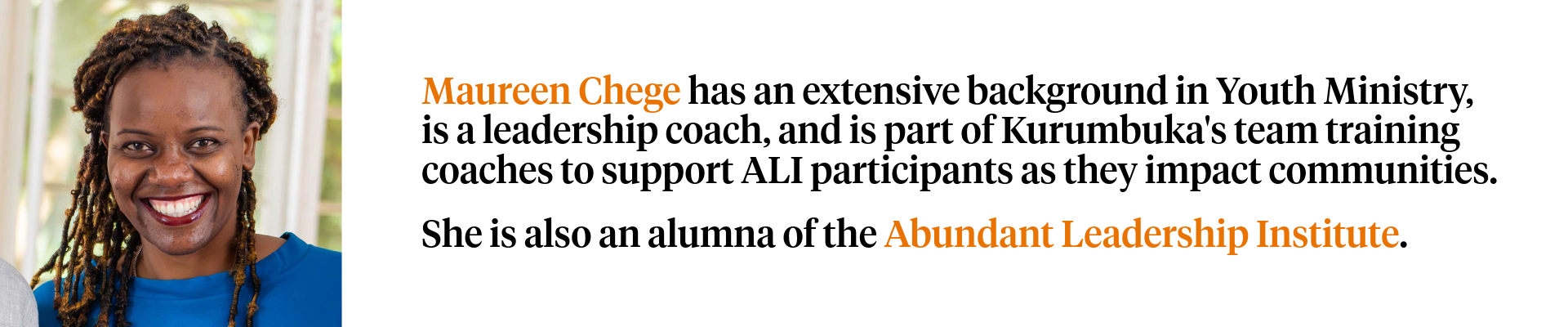

By Maureen Chege
My name is Maureen Chege, I’ve spent most of my life investing in youth ministry in Burundi. I’m a teacher at heart and passionate about mentorship and transforming leaders' mindsets. I’ve served as a Kumi Mara coach for the last couple of years, and this year I’m part of the leadership team training our coaches.
One mindset I’ve had to renew most in myself is the false belief that a good leader pushes through no matter the cost. There was a season in Burundi when I was juggling church leadership, work, and teen outreach all at once. I would say yes to every new task because I thought each one was a chance to grow. I sustained myself by filling my cup with things that genuinely rejuvenated me, like going to the gym and dancing, but over a couple of months, as I got busier, those very things that restored me were the first to be cut from my life. I thought I was making time for what mattered, but I felt more tension, less patience, and negativity creeping into things that used to excite me. One of my closest friends told me I was carrying too much. I was too deep into unsustainable leadership practices that I didn’t notice the burnout signs in my own life.
Our capacity as leaders is finite, and protecting it isn’t selfish; it’s stewardship. Jethro’s advice to Moses in Exodus 18 can be applied to our lives as leaders: “This job is too heavy a burden for you to handle all by yourself.” Many leaders fall into the same trap Moses did, believing that carrying everything alone is what leadership requires, when in fact it breaks leaders down. My close friend who confronted me was my Jethro - she addressed the burnout and wanted the best for me.
At Kurumbuka, a core part of the Abundant Leadership Institute is Kumi Mara, a community training program that places every leader in a small group led by an alumni coach. These groups provide accountability, collaboration, and support as leaders train at least ten others in their own communities. The coaches use a buddy system to keep each other accountable and sustainable in their leadership practices. Within our pairs, we talk through challenges and offer encouragement.
This mindset shift to practicing more sustainable leadership takes time. For real transformation, it requires consistent accountability, honest conversations, and mutual support with a peer.
If you’re a leader experiencing that same sense of “flatness”, I want to encourage you to practice the following:
Recognize the symptoms of burnout early - a negative attitude creeping into everything, rising tension, dulling motivation, and a reflex to say yes to every task. Naming these honestly, rather than pushing past them, is the first act of leading yourself well.
The second is a simple three-step rhythm I’ve practiced since my close friend confronted me: clear my plate by resting my mind and delegating what doesn’t need to stay with me; fill my cup by doing more of what I love; and only then can I serve others from a healthy place - A leader who empties themselves completely has nothing left to pour, no matter how good their intentions.
When we put these boundaries in place, we become more sustainable leaders. It’s not indulgent; it's one of the best ways to start serving others.
A few questions worth sitting with:
What are the early symptoms of burnout in you, and are you noticing them or explaining them away?
Who in your community can you ask to be your Jethro?
Is your cup currently being filled, or just drained?
When I think about the future of East Africa, I hope for a generation of leaders in churches, schools, and communities who model that caring for others starts with the honesty and humility to care for themselves first so they can keep showing up for the people who need them.