
Najele’s Story
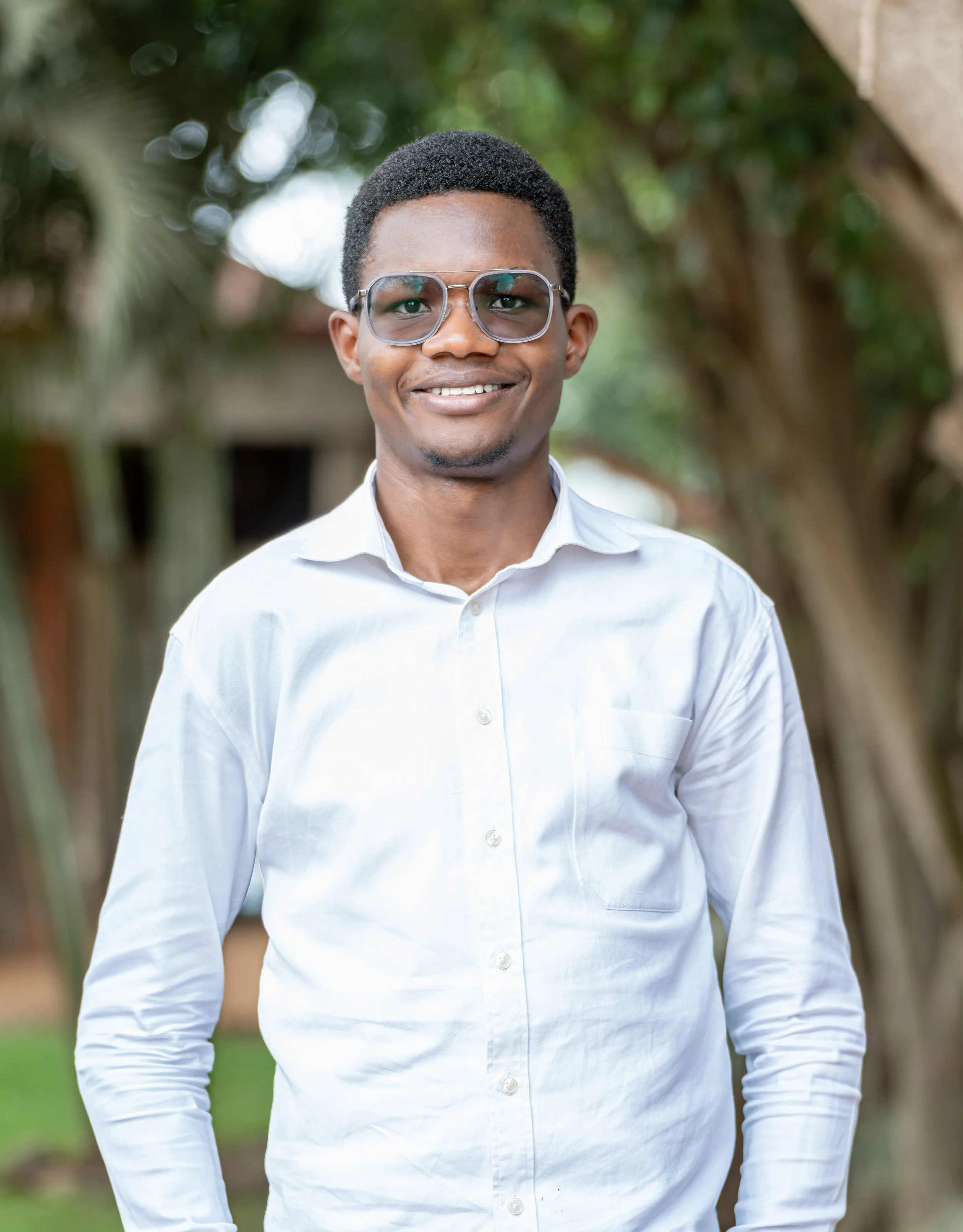
Growing Seeds: Najele Otieno
At 5 a.m., Najele Otieno woke suddenly from a dream. Fluorescent lights blinked down on him. In his dream, he was running.
He had felt grass beneath his feet. The freedom of movement he had known in soccer. “I was running in a field,” he remembers. “But when I opened my eyes, I was back in the hospital.”
Infection had spread through his body after a soccer injury. The dream filled him with hope. “I thought this might be the miracle I had been praying for. I tried getting out of bed. My feet were very weak. I tried to stand, but couldn’t without holding myself up on the bed.”
Najele believed God would intervene and restore the future he had spent his life working towards. “Through those seven months, I believed I would get a miracle. Football was everything to me.”
Najele was born in Kisumu, in Western Kenya. “It’s a very beautiful part of the world, located along the shores of Lake Victoria.” He describes his childhood with fondness, sharing about the love of his parents and the joy in their family, while being honest about their challenges. “I grew up in a place called Nyalennda, one of the slums in Kisumu. My father is a pastor, my mom a worship leader. I’m the eldest of six.”
“My aunt and uncle helped support us. When I was young, my uncle told my dad, ‘You have many children and not enough income. Let me take the boy with us.’” Najele moved with his aunt and uncle to Mombasa, thousands of kilometres away from home.
In this new city by the ocean, he discovered a passion that defined his youth. “In Mombasa, I discovered football. I played whenever I could, wherever there was space. I was convinced I would become a professional footballer.”
Najele shaped his hopes for the future around this dream.
Then, in 2013, he injured his foot.
“There was a severe infection in my right ankle. It spread to my bloodstream and bone marrow. The doctors realized it just before it reached my spinal cord.”
His life unraveled. He spent seven months in the hospital, undergoing twenty surgeries and two hip replacements. Sixty days into his hospital stay, Najele remembers a visit from his father. “My dad came into the hospital with a man I had never seen before. His name was Dave. There was nowhere to sit, so he knelt down beside my bed.”
Dave showed him pictures, told stories, and shared about his life. “Before he left, he asked me if I wanted to be born again. He led me to Christ there in the hospital.” At the time, Najele believed this would also bring physical healing. But that miracle didn’t come.
“I didn’t lose faith in God. I had seen so much while in the hospital - people dying, others being discharged, immense kindness from a stranger who gave me an urgent blood transfusion. I didn’t stop believing. I was just very disappointed.”
Najele had to learn to walk again and relied on a walker. “I had to begin life as a disabled person. I returned to Kisumu and began school there.” The adjustment was painful.
“I experienced a lot of discrimination. Every time kids saw me, they pointed at me. I despised myself.”
Najele was determined not to be defined by his disability. He worked extremely hard in school, and even other children came to him for help with their studies. Gradually, the way others saw him changed.
Almost by accident, Najele found himself in a leadership role; his high school peers nominated him to be their class pastor, a student responsible for daily devotions. Looking back, he laughs at how unaware he was of what was happening. “I still had low self-esteem. I didn’t realize that I was exercising leadership. I just thought it was devotions.”
Years later, his mentor Dave - the man who led him to Christ - invited him to a training on servant leadership. “I was nervous. I was the youngest person there by far. Everyone else was a bishop or senior pastor.” He brought his fears to Dave, who reassured him, “You’re going to do very well in this class.” Through this, Najele began to see his own story differently. “I realized I had been leading in my school for the past four years.” That moment awakened a new passion in him.
Najele moved to Nairobi and began studying strategic management at university. While serving as a student leader, he noticed troubling patterns. “We were supposed to be improving students’ lives, but some of the leaders were misappropriating bursary funds meant for needy students.”
This experience forced him to confront a difficult truth. “We have a leadership problem everywhere. In government, in education, even in the church.”
This growing conviction deepened during a national crisis in June 2024, when young Kenyans took to the streets to protest government policies. The demonstrations turned violent. “I watched as young people were being shot and killed in the streets. I couldn’t stop thinking about the Gen Z kids and their parents seeing them dead. What was in the hearts of the people leading our country? The people we had asked to lead us?”
Najele began to see leadership differently: “It’s an opportunity God gives you to provide healing for the people you serve. But many leaders have forgotten that.”
He began looking for a way to grow as the kind of leader he felt deeply convicted to become. His mentor introduced him to Kurumbuka Leadership Solutions, where Najele enrolled at the Abundant Leadership Institute.
“From the first day at Kurumbuka, I felt warmth. I was welcome.”
Kurumbuka helped Najele deepen his understanding of transformational leadership. “One insight that really challenged me was how our mindsets and beliefs influence our leadership. My beliefs might actually be causing me to have toxic behaviour. What’s upstream will flow downstream. Likewise, my beliefs shape my actions.”
The experience created another shift in how he saw himself. “You cannot represent God well in your leadership unless you are inwardly transformed.” Kurumbuka strengthened Najele’s conviction about the importance of inner formation and helped him refine how he saw leadership in the world.
During his time at the Abundant Leadership Institute, Najele launched an organization called Transformational Servant Leadership Africa, focusing on mentoring young leaders and teaching abundant leadership, servant leadership, and community development. Principles from Kurumbuka that had transformed him. Through his work, Najele is now training leaders across Kenya.
He also wrote a book titled In His Hands, reflecting on how pain shaped his life. “I share how God uses our pain to mould us and draw us closer to Him.”
Together with colleagues from his ALI cohort, Lena and Everlyne, Najele has multiplied leadership training to church leaders and staff from Hungry for Life and the Salvation Army - leaders who serve in communities facing significant challenges. So far, they have trained 58 community leaders.
Najele helps those leaders identify scarcity in their own communities and facilitates workshops where people discover solutions that already exist among them.
“When dealing with communities, we should not give them solutions. The solutions must come from the people themselves. And when they do, they are so excited and empowered to own the solutions.”
This is transformational leadership in action - and the impact is multiplying; one leader who attended a workshop went on to train 45 others using the principles Najele had taught him.
“These are the seeds we are planting,” Najele says. “I may not see the results in my lifetime, but I believe this is what will transform Kenya.”
Najele’s vision for Africa is rooted in hope. “Africa has so much potential. We can rise beyond the limitations we have placed on ourselves. I want to see leaders who are empathetic and compassionate. Leaders who truly listen to the people they serve.”
For Najele, leadership ultimately reflects the heart of Christ. He shares, “Don’t we all yearn for God to say to us we are leaders after His heart?” Najele has been personally transformed, and is now pursuing a new dream for his life: That every community and every leader across Africa will experience Christ-centred transformation.
He no longer sees his scars from his surgeries as signs of loss. Instead, they remind him of a deeper truth from one of his favourite quotes: “In God’s garden of grace, even broken trees bear fruit.”
The change he hopes to see in Africa may take generations. “Every leader I train is another seed,” he says. “And one day those seeds will grow.”